
Supporting the Association for Thought Field Therapy by furthering research, education and charitable purposes.


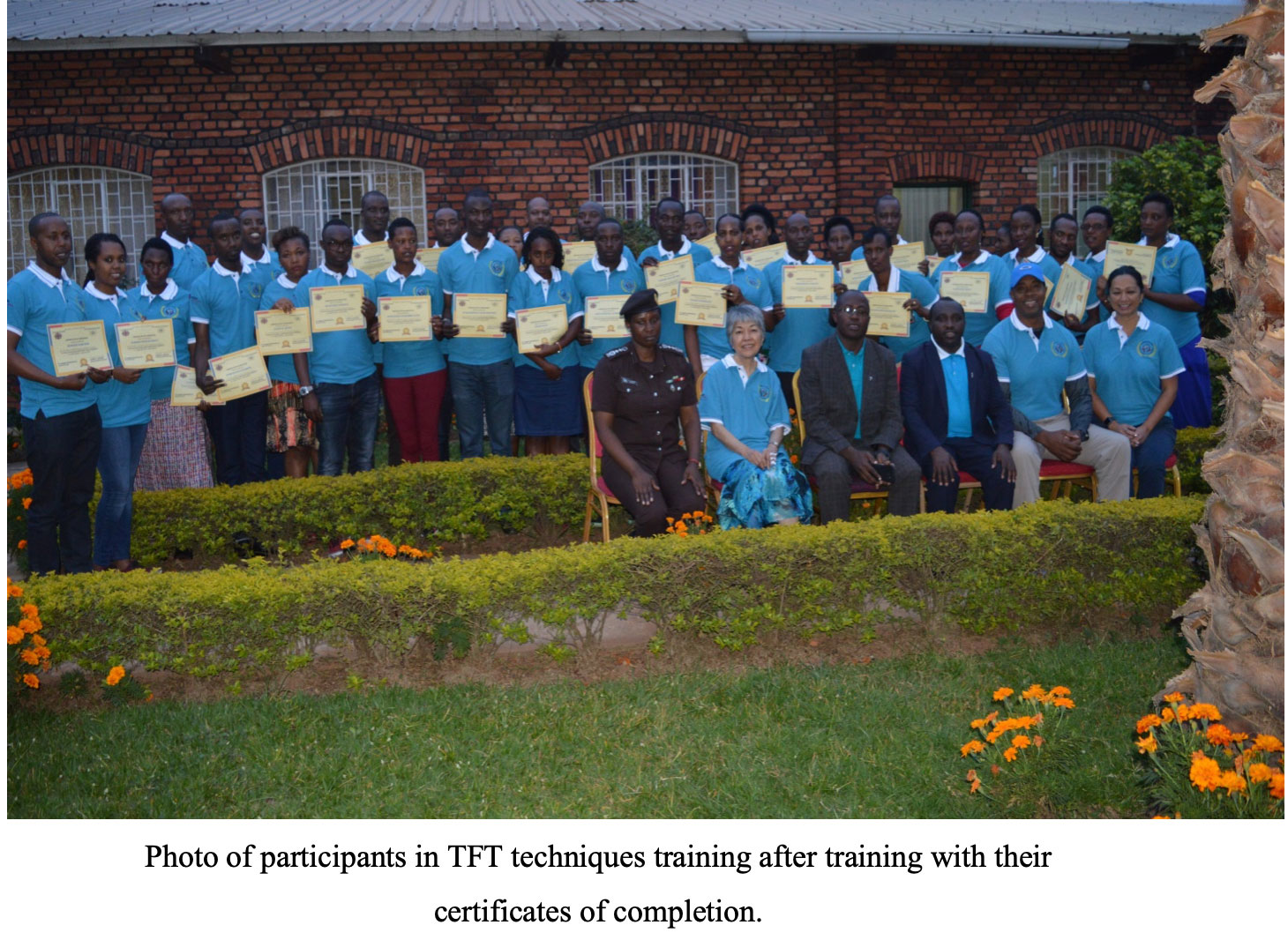
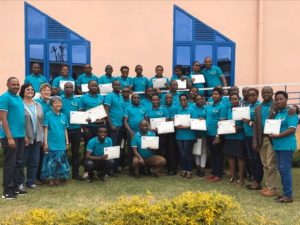
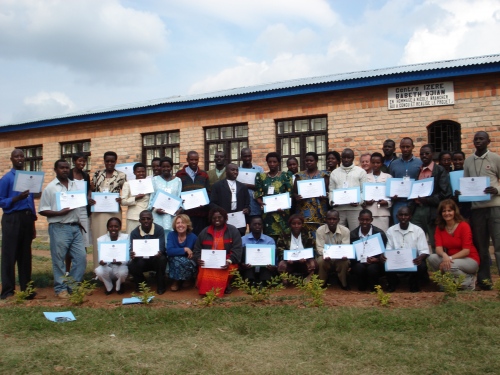
In order to empower the professional clinical therapists and clinicians working together in Rwandan prisons to help the prisoners to improve their mental health, there have been the trainings on TFT techniques in BYUMBA Catholic Diocese from 05th to 07th August 2018.
Within this period of training, the training has been very beneficial because the participants have gained other knowledge and techniques that were not on the techniques they were using in order to handle the psychological problems of the prisoners in Rwandan prisons.
So, the participants are very grateful to the BYUMBA Catholic Diocese and the team from USA who have brought TFT here in Rwanda but more specifically in BYUMBA Catholic Diocese.
In one word, this training has been more important to all participants because they have gained new knowledge and other new skills and techniques that will be more used by the participants in their daily activities while dealing with their clients.
On the side of the participants in the training and RCS (Rwanda Correctional Service) in general, they are thanking a lot the team of TFT from the headquarter in USA more specifically Dr. Caroline SAKAI and Debra N. NEW and all those who have contributed with the team to train the participants. Lastly, the participants have confirmed that they will try their best to put into actions what they learnt from the training.
Caroline Sakai made her seventh trip to Kigali and Bumba, Rwanda with two other TFT practitioners from Hawaii and one from California visiting Rwanda for the first time: Debra New, executive director of the Nalaniikaleomana Foundation which funded the mission; Dr. Carlann Defontes, who works as a medical doctor for the Veterans Administration on Molokai and does national VA trainings, and Stephanie Sakai who is Caroline’s daughter. Rwanda is prospering with more economic developments: new buildings under construction especially in Kigali, new roads being built, new businesses being created, and numerous foreign investors developing industries and technologies within the country.
Father Jean Marie Vianney Dushimiyimana and Father Augustin Nzabonimana took us to our first destination to pay our respects at the Kigali Genocide Memorial — a somber and educational memorial which documents the history of genocides in Rwanda, Germany, Cambodia and other countries. The exhibitions describe the events that preceded genocides, precursor warnings, the inciting of discrimination and divisiveness which contributed to the horrific atrocities. The lessons found here confront us with the consequences, when efforts are not made to preserve peace, unity and success for all. We were inspired by testimonies of amazing grace, the power of forgiveness and reconciliation, and the remarkable potential for resiliency.
Pastor Celestin Mitabu then took us to the Institute for Disabled Children (Inshuti Zacu) where Sister Emeritha Myirandayezeye and the physical therapists, nurses and other sisters have been doing admirable work with the vulnerable children who have neurological, mental and physical challenges, including fragile bone syndrome. They have done inspiring work despite limited funds and medical resources.
We also met with Nicolette Nsabimana, who gave us a tour of the Center Marembo, the soon-to-be-opened community health and rehabilitation center for street children and victims of abuse. This center will provide many needed and currently unavailable services: psychosocial and medical rehabilitation, care for victims’ children, educational or vocational training, assistance with income generation, business plan development or training, and reintegration into family and community.
The following two days we helped Pastor Celestin Mitabu with Algorithm Training at the Kigali Institute of Management (KIM), training over 100 new practitioners, including university students, nurses, psychologists, and nuns. Adrienne Nahayo from Izere Center in Byumba came to assist.
The next two days we helped Pr. Celestin train almost a 100 more practitioners, including university students, social workers, and psychologists at the Integrated Polytechnic Regional College (IPRC Kigali). Kabayita Musinga IPRC Counselling and Guidance Officer attended and addressed the students at this Algorithm Training. Pr. Celestin and his Red Cross teammates provided a demonstration and reenactment of the procedures and treatments administered at the genocide memorials when overwhelmed participants faint or become hysterical.
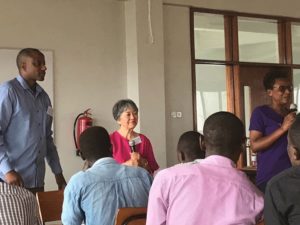
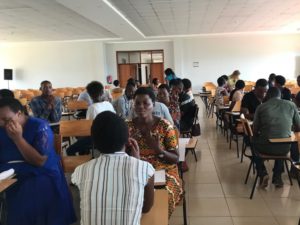
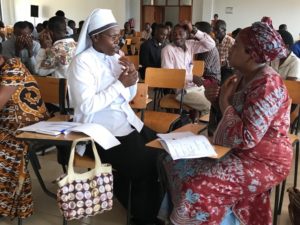
The affected person is carried to an assessment room, and the person is placed on a mat and assessment is made by the Red Cross workers to rule out medical emergencies. Then one TFT practitioner voice quietly talks to the person while the appropriate meridian points are tapped until the person recovers enough to sit up. Then when the person is able to sit up they are moved to the next room or area where they are seated in a chair and calmly taken through the trauma plus rage plus guilt (or whatever is indicated) treatment and encouraged to tap on themselves as soon as they are able to do so. Once stabilized and recovered, they check on anything else that may be immediately needed, and if stabilized, the person then can go to a quiet room to rest until they are ready to rejoin their family or neighbors at the memorial event.
Since the incorporation of TFT teams and TFT interventions into the Red Cross procedures, the number of genocide memorial ambulance to hospital visits has been reduced from about two dozen each time, down to an occasional one or two with actual heart conditions etc.
We then traveled north of Kigali to Mutete which had suffered more atrocities than other sectors of Rwanda. They had a memorial site there for 1400 deceased with several remains in each flag-draped coffin. They had not found many of the victims, until they were later told by their killers where the bodies were buried, and the personal articles of clothing and jewelry were used to verify the identities of those buried there. After treatment from Adrienne and Izere team the 4031 widows are now helping themselves to sustainability with raising pigs and cows, planting seeds for vegetables, and developing biogas. Mutete has a model village where survivors and the genocidiers are now living together side by side in the identical homes, some even built together with help from others in the village.
Father Augustin Nzabonimana and Adrienne Nahayo led a review of TFT for 30 Rwanda Correctional Service (RCS) personnel from the 13 correctional centers from all the provinces in Rwanda. Some had traveled over 6 hours by bus and motorbike taxi to get to the training Centre FIAT from their RCS sites. We taught TFT toxin treatments in response to the class interest in addressing addictions and toxins. It was joyful to hear from them how they have been using TFT in their centers, including the progress made by one of the most complex cases encountered last year. The case involved a young un-socialized man who had survived alone in the forest for 20 years since probably around age 4. He had been attacking people who tried to help him, but was able to calm down with the suggested interventions. He has now moved out of corrections to rehabilitation services.
The working partnership between RCS and the Byumba Diocese is a model of successful cooperation, providing tools which can be used by anyone to transform their lives regardless of their situation or circumstances. This was exemplified when all the RCS staff went to the Izere Center (Center of Hope) in Byumba to meet and work with the widows and single mothers there from the Ninyawimana Parish. RCS therapists expressed gratitude for the experiences of helping widows and single mothers with their children and babies, and getting warm expressions of appreciation from them. The widows and single mothers were appreciative of the RCS staff, many of whom had traveled from afar to meet and work with them.
The mantra of practice, practice and more practice making for greater ease and facility in utilizing the protocols of TFT was reinforced for all, as in a relatively short span of a couple of hours about 300 were treated with participants ending with smiles, handshakes, high fives, or hugs. Testimonials by the Widows Cooperative related the journey from being unable to function after the genocide despite efforts for help with financial assistance, housing and sustenance prior to their treatment with TFT for PTSD, anger, survivor guilt, etc. to their transformation becoming successful farm owner-managers, entrepreneurs, and business women who were able to support themselves and thrive. They epitomize the motto seen on the shirts of the TFT practitioners: from Trauma to Sustainability. The Widows TFT Support Group is now coming together to help the Single Mothers TFT Support Group which is struggling with discrimination, repeated traumatization, and poverty.
We then journeyed to the west to the Nyakiriba Correctional Center in the Rubavu District. 142 inmates have learned TFT and gave testimonials of their progress in a center with 6000 inmates with differing needs including HIV, Teens, Seniors, Mental Problems. The inmates are having 30 minute one-on-one TFT sessions. Testimonials included an inmate who had been mute since the 1994 genocide who now was able to speak; and a survivor who had been hearing voices since the genocide and stayed isolated in his bed all the time, who had not been helped on medications over the years, but who now is socializing with others.
We then went to the Musanze Correctional Center in Gereza Ya Musanze where there are 2016 inmates, including men, women and children under three (the children are allowed to be with their mothers as babies until age 3). Testimonials included a drug addict who came to realize why he started using drugs after TFT treatments and worked on the underlying issues; a depressed 86 year-old who was imprisoned at age 72 and had been unable to sleep until TFT treatments; a woman who is in for life and worries about her children but found help with her anxiety and acceptance of her situation; a woman helped with her anxiety; and a man who had been daily fighting about being wrongly accused and having to spend his life in prison who came to acceptance of his fate and finding he could have new meaning and purpose in his life helping others with TFT. Pastor Celestin Mitabu made the several hour journey to Musanze to join and support the Byumba team but due to an unexpected delay of our not being able to enter the facility for two hours, he had to start his return trip back to get back to Kigali while late buses were still running.
The total RCS inmate population is approximately 60,000, with the largest correctional center holding 12,000, and the second largest 11,250. Each district in Rwanda has its own center. Rwanda has 3 prisons that hold children, 2 have only women, and 2 have men and women on the same grounds. Sentences range from 5 years for bribery (offering as well as taking bribes), 10 years for robbery, 15 years for rape, life sentence for murder, 3 years for abortion before 3 months gestation, life sentence for abortion after 3 months. The inmates receive vocational training, including sewing instruction and construction training. Meals are mainly beans, rice, maize, and vegetables. Mothers and children also receive porridge with milk.
RCS will be expanding their mental health and health staffing and will be needing training and advanced training for their staff with TFT. They have demonstrated the power of TFT in helping to transform the prisons, and as seen in the villages with the widows and others, move people from despair and loss of hope to having renewed vitality, focus, enthusiasm, hope and ability to concentrate and move forward to productivity and sustainability. For those who will be released from the correctional centers after their sentences are served, they are expected to go out into their communities to help others who are still in need of help. This will be the completion of the cycle of transformation which started with the orphaned children, community leaders, widows, survivors, single mothers, inmates…..and full circle with everyone reaching out to help those in greater need.
What an incredible transformation of a nation from despair from trauma, to hope for recovery, to sustainability, to altruism and helping others. Indeed as we noted how they have become a model for us and the world, exemplifying how we may all heal from trauma and rise to then help others, they sincerely said, thank you and how can we give back to help you?
(P.S. The Rwandans assistance with the research on PTSD has already helped us start on the path to follow their example of taking TFT into the universities, schools, medical establishments, etc.)
Respectfully submitted,
Caroline E. Sakai, PhD
With thanks to TFT Hawaii teammates
Debra Nalaniikaleomana New (Nalaniikaleomana Foundation which raised funds for this mission and assisted with training)
Stephanie Sakai (logistical, technical, and training help)
Dr. Carlann DeFontes (medical advisory and training help)
By Roger Ludwig
Mists of mosquito netting drape around me as I type, cross-legged, on my bed. Beyond are cracked walls and doors ajar. Any effort to make and keep parallel lines in Africa is usually ephemeral. But to do that, in the form of a well ordered scientific study of Thought Field Therapy’s effectiveness, we have come, in addition to training many people and treating dozens of others.
Beyond this room, in the haze of heat, humidity and dust, are now familiar sounds. Children shout, men laugh. There is the loud cawing of ravens, relentless hoopoe of grey doves, and the distant, throbbing hum of the hulking cement factory which towers over this gritty town of Hima. It brings meager paychecks to workers who come from all over Uganda with their separate languages and appearances. They toil in hope of better lives for their wives and children. Our sweat is small in comparison but our dreams are similar for these Ugandan peoples we have come to love.
The work of our mission is now finished, ending, as it began, in fatigue. I arrived two weeks ago at 3:15 am, a smooth landing in Entebbe, grabbed bags and passed customs to see the ever hospitable Fr. Peter waiting to “most welcome” me. It is my third trip to Uganda. Fr. Peter’s musical laugh and loving heart is a tonic, to me and to hundreds of others.
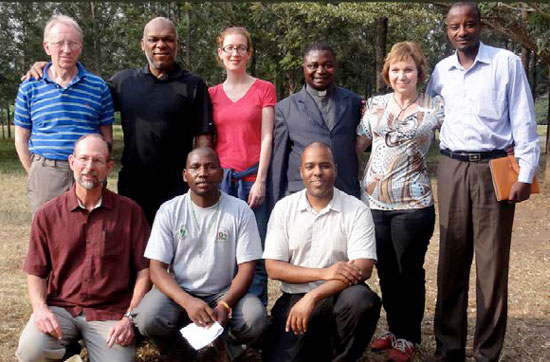
Uganda TFT team 2014, from left to right. Back row: Dr. Howard Robson, Ngub Nding, Alexandra Maillot, Fr. Peter Mbunga Basaliza, Phyll Robson, Celestin Mitabu. Front row: Roger Ludwig, Alosius, Oob Nding
After two hours’ sleep in a guest house I meet the team at breakfast. Dr. Howard Robson and his wife Phyll are here from England. They have recently retired, he from his cardiology practice, she from nursing. We have worked together on both prior Ugandan trips. It is great to see them.
One of our most important goals is to add to the 2012 study. At that time we trained volunteer TFT counselors, who pre-tested, then treated 256 people who came admitting symptoms of PTSD. A week later they were post-tested. It was a wait-list controlled effort that involved hundreds of people. Dr. Howard directed the study and has taken charge, in his relaxed manner, of this one. We hope to bring many of those 256 back, now 18 months later, for post testing. How have they fared after their brief treatment? I’ve been wondering that with a quiet urgency ever since I left.
Phyll was the senior trainer on that 2012 trip. This time she will manage our logistics and support a new senior trainer, who has just emerged into the dining hall. Ngub Nding is a personal force; laughing, open to all and everyone, massive in frame and spirit, and spirit. A former pharmacist and pharmaceutical researcher, he is now a life coach and TFT practitioner in Paris. Ngub (pronounced nGoo) is accompanied by his partner, Alexandra Maillet, a gentle kindergarten teacher from Paris who is also now practicing TFT full time, and his brother Oob (pronounced Ob as in “job”) Nding, an engineer now living in Calgary, Alberta. Ngub and Oob were raised in Gabon, West Africa.
I am Roger Ludwig, a private practice psychotherapist of many years in Cheyenne, Wyoming, USA. I’m looking forward to the arrival of the important seventh member of our team, Celestine Mitabu, who is coming by bus from Rwanda, where he is a church pastor, orphanage and school director and the senior TFT trainer there. He worked with us in 2012 and I consider him a dear friend. He, with a few others, have established a very successful TFT presence in Rwanda.
These two weeks are now a blur of images and sensations, of non-stop activity, late evening suppers, a collapse into sleep. Warm handshakes in the triple African manner; the upturned looks of curious children; handsome elders, character etched deeply in their faces; and of course our trainees, young and middle aged and old, often studious, always sincere, sometimes sleepy and bewildered like trainees everywhere. There has been lots of laughter and music, joy in life’s real joys—good company and ample, if simple, food. Yet also much suffering, children in dirty rags, fevers, swollen limbs, infants failing to grow, young men who have worked hard to achieve an education who now languish for lack of opportunity.
Suffering and celebration, all in a flow, streaming in a fast drumming rhythm, a blur of hands on skin. In the west we hide our suffering behind walls. Here it is all of a piece, open to eye and sky. Caskets on display next to the vegetables, meat and clothing.
Perhaps in the west have we also hidden, or perhaps lost our joys. Africa has taught me to recapture them.
The wedding scene typified it for me. Our team sits under a canopy among the guests of honor at the wedding of Fr. Peter’s niece Meresi Muhindo and Kule Felix, in a village at the end of a rutted track. 750 to 800 people are present, gathered around a rectangular open area of swept dirt. Directly across from us is Queen Ithungu Asimawe Agnes, Queen of the Rwenzori Region. She sits alone, radiant and regal in gracious splendor, personal attendants and muscled guards radiate in a semi-circle around her.
But also in the center of the celebration hobbles a beggar with a single crutch, pants torn off unevenly at the knees. From head to toe he is coated in thick dust, cupped hand silently reaching for alms as he slowly circles the crowd. We can see that he is developmentally disabled. But no one shoos him away. The hired security guard only moves him once, and that very gently, when he is directly in the way of dancers.
Here it all belongs. All are a part. And we have been welcomed into their lives, if only for a short time.
In comparison to previous trips this one is low budget and we have concentrated on training smaller numbers of people but training them well. (Our training budget includes providing transport and food for all trainees.) From Nsenyi, a small idyllic campus midst the lush terraced farms of the Rwenzori foothills, we trained two groups of catechists, the first of 37 and the second with 12, two days of training for each group. The plan was to train them all in Dx, the diagnostic level, after a review of the Algorithms. But it became clear that review was what they needed most.
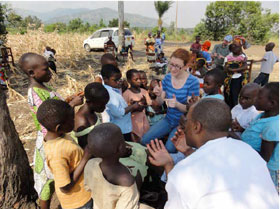 Ngub taught with dynamism, inspiring, motivating, and at times cajoling. We kept our single blackboard busy. With few handouts, they were led to take careful notes. Practicum groups were coached.
The speed and effectiveness of TFT again inspires. Alosius translates all into Lukonjo. He is a school teacher, a catechist who translated for us in 2012. As we call TFT “tapping” for short, they are calling it “kongota”, which is literally translated as “knocking”.
We prod them into practicing post-training, on themselves and amongst the communities they serve. As catechists they conduct the mass whenever a priest is not available. And with two priests for forty parishes it is the catechists that are with their large congregations, volunteering Sundays and throughout the week. Most are men but a number of women are catechists also, well respected and included.
Between these two trainings was the research day. We gathered with the catechists, organized our work, and reviewed the administration of the checklist, all the while wondering how many of the participants would return for this 18-month post-test. So many things don’t work as planned.
But come they did, 128 of the original 256, nearly all of them carrying the cards we gave them 18 months ago, each with their identification number! Tests were read from the translation, scores recorded, checked and double checked, entered in Excel and checked again. Lunch served, transport paid. At the end of the day only one sheet was deemed un-scoreable and discarded. The data are ready for the statisticians.
Much of the credit for this goes to a man who labored behind the scenes, visiting people in their villages, telling them of the follow-up, reminding them of their importance to this study. A man we never see unless we search him out. Bless you Andrew.
After the second training we packed up and moved to Bukangara, a parish compound along the busy asphalt near the Congo border. Chairs were arranged under a few spreading trees, a chalk board propped by a table. Ringing the bell of an old truck wheel hung from a tree brought in 45 catechists. Drums and praise songs, prayer and two days of algorithm review with a little Dx added. Ngub, Celestine and I tag-teamed with everyone helping with practicums in this little slice of Eden.
Saturday is the niece’s wedding, not far away. We sat for six hours of speeches, dramatic ceremony, a comic MC, feasting and a drenching downpour met the queen and took pictures of children. And the couple still had not actually gotten married. That came later at the Bukangara church. The occasion continued until midnight.
Sunday brings us to a parish church, a hundred or two in attendance, no glass in the open windows. A few hours of song, and celebration, then mass. We are treated like royalty, sung to and presented with baskets for cassava. I give a talk introducing TFT to the whole group and we lead them through a group demonstration. By raise of hand about 60% report relief of a real problem.
Ngub offers the team up to treat any who would like. And so we do, with two teams working with English translation, one with French and one with Swahili, we treat throughout the afternoon, one after another, after another. Then we visit a medical clinic established by Fr. Peter, six rooms in a concrete and tin building. We talk with the resident doctor and staff and admire the new equipment that had arrived last week.
Then another move, this time to Hima, an hour and a half to the north. Hima is hot, 100° plus. We’re teaching outside but the trees provide only a hint of shade. Just behind our group, beyond a hedge, is a dirt street, sided with a row of small shops, one erupting with blaring music. Motor bike taxis, “Boda-bodas,” go up down. But our catechists carry on. Our trainings last long. Ngub won’t quit as long as there is one more point that can be made. 35 participate; some repeats who attended one of the first three trainings. They wanted more.
Ngub, Celestine and I take sections of this one. Aloysius keeps up, claiming to never tire.
We close our trip like we began it, with a visit to the dignified, well-traveled, knowledgeable 78-year old bishop. He has supported and endorsed our work since the first trip in 2009.
Our trip is finalized with a visit to a village between Kasese and Hima to see some real estate where the church is willing to site a TFT center. One building is present, used in part as a small class room and a place for traveling catechists to stay, but it can begin use now for Kongota treatments. It sits near the Catholic Church and the Anglican, and near two busy schools. They envisage a national TFT center someday with local trainers.
Now, at the close of our work, RAIN! From the stoop I watch a hundred thousand silver rivulets streaming from the corrugated roofs. Fresh, clean, invigorating. Billowing in gusts. Cooling and washing away the day’s heat, the dust, the petty frustrations. Here rain following an event signifies heaven’s blessing. May these seeds of TFT grow in this rich, Uganda soil, amongst these generous, kind people.
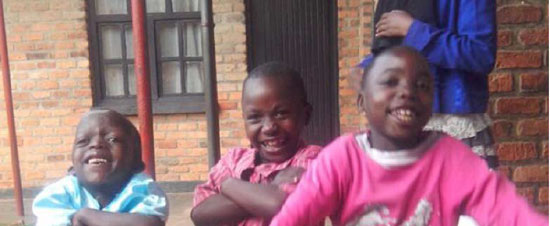
Last October, we had an anonymous donor offering the TFT Foundation matching funds to help IZERE Center community treatment days.
The last community day, held during the period of mourning, we were able to provide funding to treat 250 people and 435 came for help. So we were thrilled to have the possibility to continue to help these children and the others in the re¬gion receiving TFT relief. We asked for your help to raise the matching funds of $1100. You all responded and we received the matching funds promised.
We were able to send all the requested funds for the community treatment day.
Thank you all for caring and helping us continue to bring smiles to these children’s faces.
I would like to share one of the children’s comments with you.
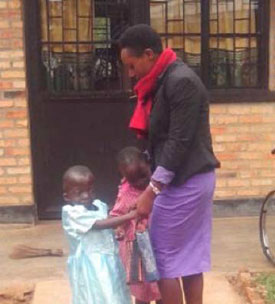
Adrienne, TFT psychologist at IZERE with children
Perhaps the most touching was shared by young child in Rwanda, Alphonsine. It is the testimony of one of the handicapped children who live in the Izere Center in Byumba, Rwanda.
She spontaneously offered it after the community treatment day that was made possible by many of your contributions.
It touched the hearts of the Rwandan therapist’s providing the TFT treatment and community day… and now ours as well. She talked about how she came to Izere Center to be helped with her studies and necessary medication. She shared her long time feelings of fear and isolation. She had complex challenges and had been traumatized because at home her parents prohibited her to go outside of the house……
She said, “I had fear to look or to talk with any people because I was not like them. I saw them with arms, with legs and I don’t have them, and I figured that I’m not a person.
When the other kids came to me I had difficulty to be with them. I only had peace when I was alone in the room, and although I’m in Izere Center for 6 years, I never had peace.
After Adrienne (a TFT trained psychologist supported by the TFT Foundation) came to me last month, she started to focus on me… she treated me with the technique that I’ve seen many times being used to treat the people who come here. Now you see, I’m very happy and I can stand between you and talk with you. I had refused to be treated for a long time; and now I’m going to convince my brother and sister to come to this school.”
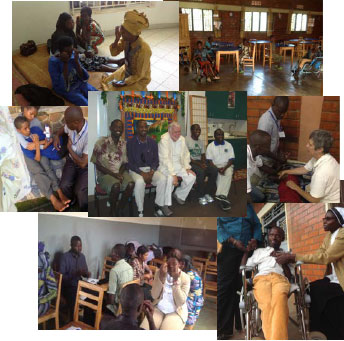
These photos are of our Rwandan TFT team and were taken during training and treatment programs. We send them to honor the legacy and lifetime of TFT’s founder, Dr. Roger Callahan. We are therapists helping people in Rwanda and the Congo using Dr. Callahan’s innovations and research (TFT). The picture with the disabled children shows how much TFT is helping the disabled in Rwanda. Also, there is another picture taken while training the Congolese. They are doing exceptional work with TFT. They have included a French condolence message to honor Dr. Callahan who started the techniques which are now helping their community.
Also, I have included a picture with Dr. Roger Callahan in Hawaii, our first time to see and speak with him. May the Lord find his place in eternal peace.
Pr. Celestin Mitabu
 Nous avons recu le message avec grande tristesse qui nous annoncez la mort de notre haute Personne de grande Valeur,le Fondateur de TFT Foundation aux USA.
Nous savons combien de fois il etait trop utile pour l’Organisation et pour nombreuses Associations:Que son Ame reponse en Paix.
Nous,Equipe de TFT de la Republique Democratique du Congo(RDC) qui a ete forme en date du 05 au 06 Octobre 2013 en RDC etant au nombre de 60 Personnes, presente nos Condoleances les plus profondes a toutes les personnes de TFT Foundation partout ou elles se trouvent dans le monde entier,aux membres du Bureau et a la Famille de l’ulustre disparu toute entiere.
Nous regretons fort cet Evenement de sa mort car nous etions entrain d’attendre un Soutien Financier pour une descente sur terrain en faisant une pratique de la matiere sur le TFT AUX BENEFICIAIRES,neanmoins nous savons bien qu’il a forme plusieurs personnes et l’Oeuvre qu’il avait commence doit toujours continuer a travailler.
Nous avons ete bien forme par Monsieur Celestin MITABU le Directeur de Rwanda Orphans Project,et nous voulons en profondir plus.
Les 60 personnes formees sont entrain de faire l’exercice de la matiere dans leurs Familles respectives et ils sont tres interesses de cela et ces familles apprecient cette methodequi produit des bons Fruits.
Nous souhaiterions que cette pratique se passe au courant de ce mois de Novembre2013 car la Population traumatisee attend beaucoup cette assistance des methodes de detraumatisation nous enseignee.
Etant ensembe de Coeur et d’Esprit nous demandons a Dieu tout Puissant de consoler cette Famille qui vient de perdre un Grand Homme de Grande Valeur pour nombreuses personnes et Organisations.
Encore une fois nos Condoleances.
Pour l’Equipe de TFT Foundation Gilbert BANYWESIZE NGUDUKA/President-E.R.S.A.M asbl-RDC-Goma-North-Kivu et President de la Synergie ou Plate forme TFT-RDC.
Celestin Mitabu, with the support of the TFT Foundation, began trainings in the Democratic Republic of the Congo a couple of months ago. The French letter of condolences (above) was a result of those trainings and the healing taking place.
Gilbert BANYWESIZE NGUDUKA, a psychologist and leader of the newly formed TFT team in the Congo, wrote the letter. He has also requested further trainings in the Congo.
Celestin shares that request and plans for these trainings, later this month.
“They have been asking me to come back to the Congo. In fact the rebellion is defeated last month when the main rebel group M23 surrendered their armies. Since that defeat we have tried to roughly plan about two days of training and treatment, both to take place in Goma.
The first training and treatment will be at RSAM where we already have many trained therapists. The second training and treatment will be held at Heal Africa Hospital where we also have many trained.
The rough plan is for the therapists to gather communities for treatments and invite 28 new trainees for the morning trainings. Because last time we trained people from 5 different centers, we have agreed that all these people and clients may come to both RSAM center and Heal Africa. I have just called it a rough planning because so far it’s not yet funded. And it is badly needed to strengthen our TFT groups in Congo.
The meeting rooms for training and treatment are provided free of charge provided in addition to my personal accommodation.
This will be a very special treatment and training in Congo, accepted and protected.
I, and my friends from the Congo, have been working on that treatment and training by telling people about our success with the previous mission in the Congo. This is going to be called a Christmas and New Year’s Gift to the people of the Congo for this year of 2013. These will take place on Dec. 22-23, 2013. The two days will be as follows: mornings for training and evenings for treatment. The last day of our training and treatment we will be gathered for 30 minutes with all therapists in a big RSAM HALL just to share about the life and legacy of Dr. Roger Callahan and to commemorate him.
Since the meeting rooms and my accommodation is being provided for free, the estimate for the two days is $1400.
We look forward to hearing from you so that we may finalize our end year planning.
Yours,
Pastor Celestin Mitabu ROP Director and TFT Greats lakes trainer”
Please help support our efforts to bring this Christmas and New Year Gift to the people of the Congo.
 By Roger Ludwig
I have just returned from Nsenyi, Uganda, the site of our current training and research project and offers this brief update. The project has been going very well, thanks to the efforts of so many.
Fr. Peter organized a superb team of volunteers at the Cathechists Training Center to take care of logistics, housing, food, transportation, translation and of course, the thirty who became TFT Algorithm Therapists.
About 250 people from the community came to be treated in the study, as well as many others who received treatment outside of the study. Study participants have returned for their post tests in high numbers and are very grateful for the treatment they have received.
The training team is being led by Phyll Robson of the UK, with Roger Ludwig from USA, Celestin from Rwanda, Matts Uldal and Bitta Wiese from Norway and Dr. Howard Robson of the UK leading the research. Others, Fr. JMV and Deacon Augustin, and Celestin the director of the Rwandan Orphan’s Project, our other newly trained Rwandan trainers, as well as Adrienne, the psychologist from IZERE Center, came over from Rwanda to assist with the study. Jackson came over from Kampala to assist as well.
In addition to the study the team has conducted three more two-day algorithm trainings for 300 or more cathechists, they have appeared on the national TV news, a 30 minute radio interview program, and introduced TFT to 500 secondary school girls and their teachers. The team was received by and had lunch with the Bishop of the Kasese Diocese and were celebrated at a party in Fr. Peter’s home village. It has been a busy, rewarding and memorable time of successful treatment and rich relationships!
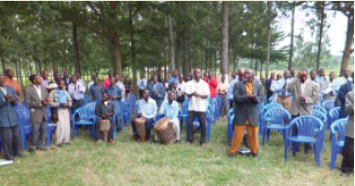
Note: We will follow up with many more photos and details from each of our team members as they return home. Thank you to all of them for their hard work, dedication and willingness to give so much both of themselves, their time and their funds.
In June 2012, an international team of TFT practitioners/trainers went to Uganda to make a difference by training locals and treating people along the way. They visited 3 parishes and help relieve stress, trauma and pain for hundreds of people.
The TFT Foundation, a 501(c)(3) nonprofit organization’s mission is to spread the use of TFT and its profound healing throughout the world.
The TFT Foundation has developed and proven a model to bring TFT to any traumatized community, where leaders can be trained to help their fellow countrymen. In three random controlled studies in Rwanda and Uganda, results showed significant improvement and follow-ups have demonstrated the results last and even improve over time.
There are now over 100 Rwandan community leaders using TFT to help their countrymen, like Jean Pierre and Kamal.
UK Team Discuss Haiti Trauma Relief Mission On ITV
In this video, Howard and Phyllis Robson talk about their recent mission in Haiti, and TFT (Though Field Therapy)
===============================================
Enjoy the slide show below from Phyll Robson of the TFT Foundation UK, on her trip to Uganda:
===============================================
The TFT trauma relief technique is very different. Yes, it looks strange and seems just too simple to be able to do much of anything. And yet, 30 years of testimony from thousands of people around the world show it to be revolutionary in its ability to help people achieve emotional freedom and peace of mind. Simply put, its effectiveness feels like a miracle as its speed and power defy all expectations and previous experience.
On top of that, the algorithms, which were derived through diagnosis, are available to anyone, regardless of education, nationality, age, race or creed. And thanks to the internet–it is FREE!
Millions of people worldwide suffer from violence, natural disaster, illness, divorce, loss of job, home or loved ones, etc. Such trauma has a severely debilitating effect on one’s life as an individual, as a community member and as a world citizen. It is the goal of TFT Foundation to reduce suffering through the powerful tool of TFT. It is also our stand that relieving the effects of trauma—the fear, grief, guilt, stress, anger, hatred–frees the individual and opens the heart, facilitating peace within and among communities.
The story of TFT and the Rwandan elder is an example of this type of transformation. During the genocide, this gentleman had seen his family brutally murdered and was attacked and left for dead himself. For years he had endured severe emotional and mental torture, even dizziness and falling. In response to the profound relief he experienced from TFT, he offered to take three or four orphans into his modest home!
Using TFT to relieve the effects of trauma can open people to peace, compassion and community. It is the intention of the TFT Foundation–and this blog–to make trauma relief available on a global scale!
Just give it a try by following the written instructions and/or the video demonstration. It takes only a few minutes. If it doesn’t work for you, or it works only partially, ask questions by posting a comment. We promise to answer as soon as possible. You can also visit the TFT membership directory for a list of TFT practitioners for further consultation.
Our world-wide projects include PTSD research in Africa, humanitarian efforts in disaster areas, and education in areas of need from poverty, trauma, and disease.
CLICK HERE to find out about our current and upcoming projects.
CLICK HERE to read about our previous projects over the past few years.


I am happy to announce the first of our team of Rwandans from the IZERE Center in Rwanda are arriving in Honolulu tonight. The others will arrive later this week.
 We are so very excited about this project as not only will four Rwandan TFT practitioners become trainers, spreading TFT far and wide in Africa, but many underprivileged in Hawaii as well as the clinics that serve them will benefit from TFT training and treatment during the month of September.
Using TFT to relieve the effects of trauma can open people to peace, compassion and community. It is the intention of the TFT Foundation–to make trauma relief available on a global scale! You can learn more about he Foundation’s work by clicking here,
We would like to ask for your help to cover some of the expenses in this far reaching project. As the air tickets were more costly than expected, and we have over run our budget.

We are seeking donations toward their food and incidentals while in Hawaii. If anyone can assist us with this, we can accept donations of any size. If you would even assist with one meal, it would make a huge difference for our guests from Rwanda.
Thank you all for your help with this sharing of TFT with those who need it.


